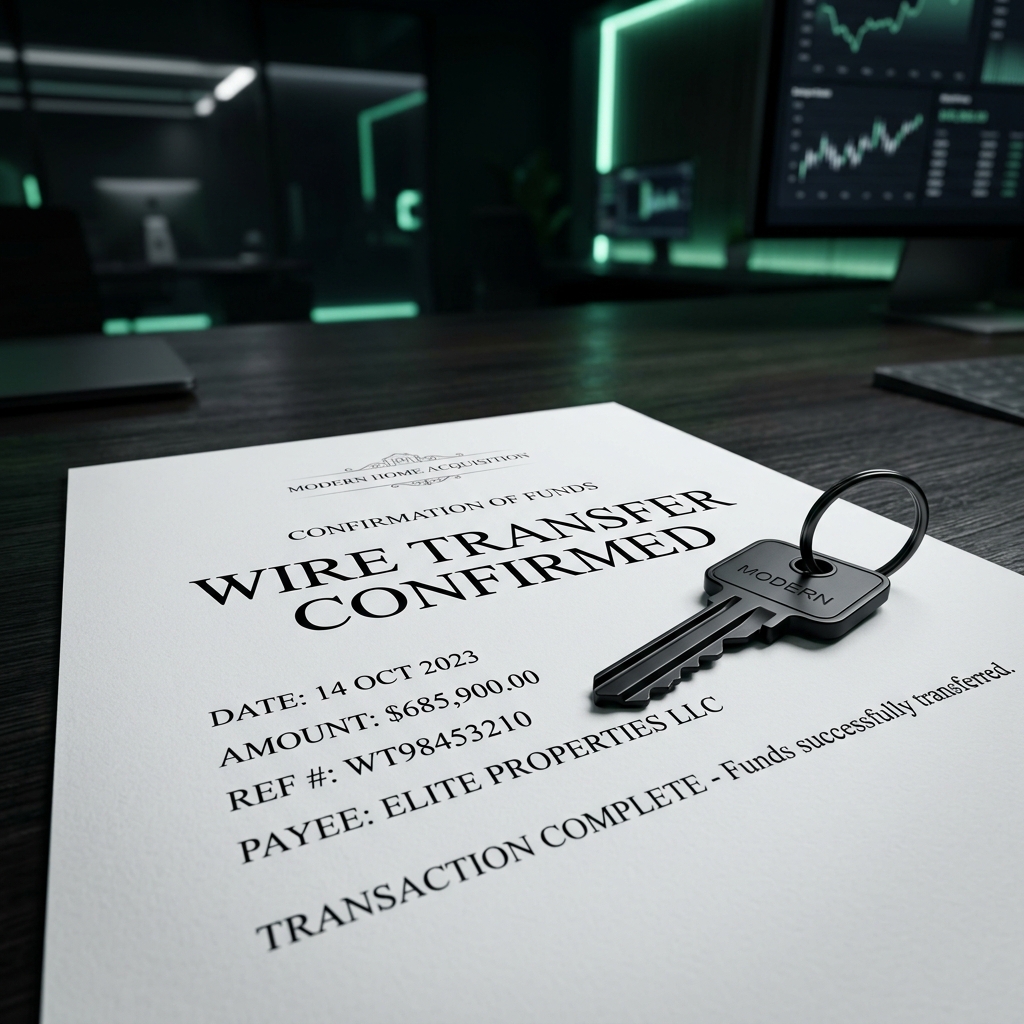
"EMD is the key that locks the door. Without it, you aren't in control of the deal—the seller is."
In the world of real estate wholesaling, momentum is everything. You find a distressed property, negotiate a price, and get it under contract. But before you can assign that contract to an end-buyer, you need to provide an **Earnest Money Deposit (EMD)** to the title company or escrow.
If you have $5,000 or $10,000 sitting in your bank account for every deal, you're fine. But if you're scaling—or if you're just starting out—tying up your own capital in 3 or 4 deals at once is a high-risk strategy. That's where EMD funding comes in.
The Mechanics of an EMD Loan
EMD funding (also called transactional funding) is a short-term bridge loan. Here is the typical flow:
- You secure a contract: You sign a purchase agreement with a seller.
- We wire the funds: We wire the earnest money directly to the title company or escrow. We never send funds to you personally—this protects the lender and ensures the money is used solely for the transaction.
- The Deal Closes: When your end-buyer funds the deal and the transaction closes, our principal + fee is returned from the side of the settlement statement.
Why Use a Lender Instead of Your Own Cash?
Even wholesalers with deep pockets use EMD funding. Why? **Velocity.**
By using a lender, you can keep 10 deals under contract simultaneously without ever touching your personal savings. If a deal falls through due to a title issue, we handle the recovery of the EMD from escrow. Your capital stays liquid, and your business keeps moving.
The "Catch": Underwriting Fees
EMD funding is low-risk for the wholesaler, but it's high-risk for the lender because the funds are placed before an end-buyer is always fully vetted. To accommodate this, most EMD lenders (including La Casa De Cash) require a small upfront underwriting fee. This fee covers the cost of vetting the title company and reviewing the contracts. Our secondary fee is then taken from the spread at closing.
Ready to lock your next deal?
Stop letting EMD requirements slow down your business. Submit your deal to our lender network today.
Submit an EMD Deal →